
Loading...
Serving Oceanside, CA and surrounding areas. (760) 854-0194
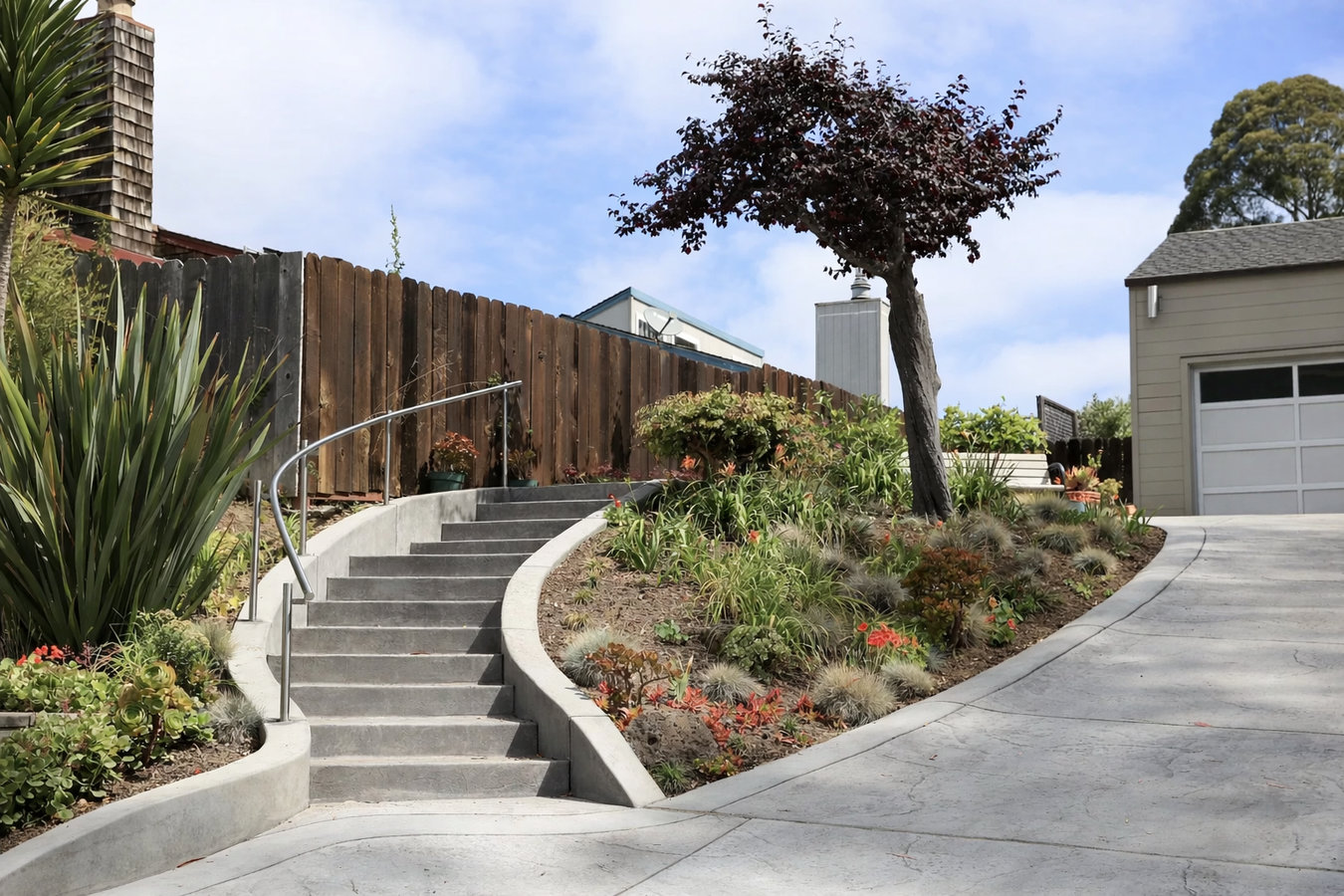
Cracked, uneven, or slippery steps are a safety problem. We build new concrete steps that are solid underfoot, properly permitted, and sealed against Oceanside's coastal air.
Cracked, uneven, or slippery steps are a safety problem. We build new concrete steps that are solid underfoot, properly permitted, and sealed against Oceanside's coastal air.
Concrete steps construction in Oceanside removes old, damaged, or unsafe steps and pours a new permanent set with proper base preparation and a slip-resistant finish - most residential jobs take one to two days of active work, then a curing period before the entry is fully back in use.
A lot of Oceanside homes were built in the 1960s through 1980s, which means front steps on those properties are now forty to sixty years old. They have been through decades of coastal weather, minor ground movement, and regular use - and many are showing it. Cracking, uneven treads, and surfaces that have worn smooth are common, and all of them are safety issues that tend to get worse rather than better. If your yard has a slab foundation or an adjacent walkway that also needs work, we can often schedule that alongside your steps project to reduce the number of times you are dealing with a crew and a disrupted entry.
The base preparation before the pour is the most important part of the job - if the ground underneath is soft, loose, or was not properly prepared the first time around, new steps will have the same problems the old ones did. Call (760) 854-0194 and we will talk through what your project actually needs.
If cracks are wider than a hairline or run all the way through a step, the structural integrity is compromised. In Oceanside's coastal environment, salt air and moisture get into those cracks and widen them over time. What starts as a cosmetic issue can become a safety hazard faster than most homeowners expect.
Stand at the bottom and look across the surface of each tread. If any step looks sunken on one side or noticeably off-level, the base has shifted. This is especially common in Oceanside's older inland neighborhoods where clay soils expand and contract with seasonal moisture, slowly pushing concrete out of position.
Spalling is when the top layer of concrete starts to chip or flake away, leaving a rough, pitted surface. It is a slip hazard and a sign that water has been getting into the concrete and breaking it apart from inside. If your steps look like they are shedding small chunks, they have likely reached the end of their useful life.
Oceanside's morning marine layer leaves surfaces damp even without rain. If your steps feel slick underfoot on those mornings, the surface texture has worn smooth - either from age or from a finish that was never right for an outdoor coastal setting. Slippery steps are a genuine fall risk, especially for older family members.
We build new concrete steps for front entries, side entries, garden paths, and pool surrounds. Every project starts with demolition of the old steps, proper excavation, and a compacted gravel base - because the base is what determines whether new steps stay level and crack-free for decades. Permit handling with the City of Oceanside is included in our process, so the work is on record and inspected. If your project also involves a concrete sidewalk connecting to the entry, we can often pour both in a single mobilization.
Finish options start with a broom texture - the most slip-resistant and most practical choice for an Oceanside coastal environment. For homeowners who want a more polished entry, stamped concrete can mimic stone, brick, or tile, and exposed aggregate gives you a natural texture that holds up well in outdoor settings. All finishes are sealed after curing to protect against the salt air and clay soil moisture that affect concrete longevity in this area. If the project connects to an adjacent slab or foundation work, we coordinate the two scopes to avoid conflicts in sequencing or finish.
Best for homes replacing original steps that have cracked, tilted, or worn beyond repair.
Best for homeowners adding access points or replacing a secondary entry that has deteriorated.
Best for navigating grade changes in the yard, connecting a patio or pool area to a higher or lower level.
Best for homeowners who want a front entry that matches or complements existing hardscape finishes.
Oceanside's coastal air is the first factor any concrete contractor here needs to account for. Salt particles carried in on ocean breezes work their way into small surface cracks over time and accelerate wear - especially on steps that were never sealed or have not been resealed in years. We apply a penetrating sealer after every project as a standard part of the job, not as an add-on. The difference in surface longevity between a sealed and unsealed step in a coastal environment like Oceanside is significant. Homeowners in Encinitas deal with the same coastal conditions and we carry that same sealer-first approach to every project there.
The second major factor is the soil under the steps. Much of Oceanside - particularly older neighborhoods around El Camino Real and the coastal tracts built in the 1960s through 1980s - sits on clay-heavy soils that swell when wet and shrink when dry. That movement is one of the most common reasons steps crack or tilt within a few years of being poured. We excavate, compact, and lay a gravel base specifically designed to handle that kind of seasonal soil movement before we pour. Homeowners in La Mesa face similar expansive clay soils, and the same preparation approach applies there.
We ask for a few photos and basic measurements, or schedule a site visit for larger projects. You will receive a written quote that breaks down labor, materials, and permit fees separately. We respond within one business day.
Before any work starts, we assess the existing steps, soil conditions, and drainage. If a permit is required - and for most structural concrete steps in Oceanside it is - we submit the application to the City of Oceanside Development Services department. Allow one to two weeks for permit processing.
We remove the old steps, excavate and compact the ground, lay a gravel base, and build the wooden form. Steel reinforcing bars go inside the form before the pour. The concrete is then poured, leveled, and finished with the texture you chose. Most pours take a few hours.
We cover the steps to keep them moist during curing - critical in Oceanside's warmer months. Avoid the steps for 24 to 48 hours after the pour, and plan for one week before regular use. After curing, the city inspection is scheduled and we apply a penetrating sealer before we leave.
Free written estimate, response within one business day. No pressure and no obligation - just straight information about what your project needs.
(760) 854-0194Clay-heavy soils in Oceanside neighborhoods expand and contract seasonally, and steps poured on an unprepared base will crack and shift as that movement happens. We excavate, compact, and lay a proper gravel base as a standard part of every steps project - not a premium add-on. That foundation work is what determines whether steps last five years or thirty.
The City of Oceanside requires permits for structural concrete work, and we handle the application, the inspection scheduling, and the final sign-off on every job. You will not have to track down the permit status or coordinate with Development Services yourself - we manage that from start to finish.
Our California C-8 Concrete Contractor license covers the type of structural and flatwork involved in steps construction. You can verify any contractor's license at the California Contractors State License Board. A valid license protects you if anything goes wrong with the project.
Salt air penetrates unsealed concrete over time and is a leading cause of surface wear on steps in coastal Oceanside neighborhoods. We apply a penetrating sealer after every steps project as a standard part of our finish process. The Portland Cement Association recommends sealing as essential maintenance in coastal and high-UV environments.
We have been working in Oceanside since 2023, and every steps project we complete is permitted, properly prepped, and sealed before we consider it done. That process is the same whether you have a three-step front entry or a larger garden staircase.
When steps connect to a new structure or ADU, we can coordinate the slab and steps work to ensure the two surfaces meet correctly and cure on the same timeline.
Learn moreA new sidewalk leading up to rebuilt steps creates a consistent, finished entry - we often combine both scopes in a single project to save on mobilization.
Learn moreWorn or cracked steps are a safety problem that tends to get worse over time. Call or submit a request today and we will respond within one business day.